The way people search has changed a lot, and I’ve seen this change happen firsthand while working with clients over the past year. Old-school SEO techniques that used to guarantee first-page rankings don’t work anymore. When I added schema markup to a client’s website not long ago, their traffic didn’t just come from Google’s blue links anymore. Almost 40% of their visibility came from AI-generated answer boxes and overviews.
This change isn’t coming; it’s already here. Google’s AI Overviews show up in 39% of all searches, and ChatGPT now has 400 million active users every week who ask for advice, do research, and make purchases. If your content isn’t optimized for these AI-powered search experiences, a huge part of your potential audience won’t be able to find it.
For the past few months, I’ve been really getting into AI search optimization. I’ve been trying out different methods, looking at what works, and putting strategies into action on my own website and for client projects. What I’ve learned has changed the way I do SEO consulting in every way. This isn’t about giving up on traditional SEO; it’s about changing your approach to fit how people actually look for information these days.
In this guide, I’ll show you everything I’ve learned about how to rank well in both Google’s AI Mode and ChatGPT search. These aren’t just ideas; they’re real strategies that I use every day at work. If you own a local business, run an e-commerce site, or offer professional services, knowing how to optimize AI search will make the difference between success and failure in the next few years.
What Does AI Search Optimization Mean?
First, let me clear up what we’re really talking about, because this word can be very confusing.
Getting to Know the Change from Traditional SEO
The goal of traditional SEO was to get your website to the top of a list of ten blue links. You worked on your site’s speed, built backlinks, and optimized for keywords in the hopes of moving from position seven to position three. The goal was always to be seen on the search results page itself.
AI search optimization works in a very different way. Your content doesn’t get ranked in a list; instead, it gets chosen (or not) to be included in AI-generated answers. When someone asks ChatGPT, “What’s the best approach to local SEO for small businesses?” or Google’s AI Mode answers “How do I implement schema markup?” these AI systems get information from a lot of different places and put it all together to give a full answer.
Your content is either included in that answer, with citations, references, and authority for your brand, or it is completely ignored. There is no second page of AI results. You are either in the answer or you are not.
This is what a lot of experts now call Generative Engine Optimization, or GEO. I’ve written a lot about Generative Engine Optimization on my blog, and it’s now a big part of how I do my work for clients.
Why AI Search Optimization is Important for Your Business
This really drove home the point for me: a client in the digital marketing field had great traditional SEO rankings, with the top three for a number of competitive keywords. But when we looked at where their traffic was really coming from, we saw that AI referrals had grown by 357% from one year to the next, while traditional organic search had only grown by 12%.
The businesses that are mentioned in ChatGPT responses and Google’s AI Overviews are not only getting more exposure; they are also becoming known as the experts in their field. If ChatGPT suggests your brand or Google’s AI links to your article, that’s better than being the fifth link on a search results page.
This trend is getting worse, which is even more important. Google has made AI Overviews available in 15+ languages and in over 140 countries. ChatGPT search now handles millions of queries every day, and more and more people are skipping traditional search altogether. If you’re not optimizing for these platforms right now, you’re building your whole digital strategy on a base that is getting smaller by the day.
What Google AI Mode Means for SEO
When I first started testing Google’s AI Overviews, I noticed something interesting: the AI-generated answers didn’t always include content that used to rank well. Sometimes pages that were ranked eighth or ninth were cited, but the number-one result was completely ignored.
This made me realize that Google’s AI uses different criteria to rank pages than regular search engines do. It is very important for my consulting work to know about these differences.
What Sets Google AI Overviews Apart
Google AI Overviews don’t just list relevant pages; they combine information from several reliable sources. The system uses Google’s Gemini 2.0 models to understand the situation, look at things from different points of view, and write complete answers.
This is what an AI Overview really looks like:
- Content that has been put together from 5 to 8 different sources on average
- Straightforward answers that answer the question without needing clicks
- Citations of sources with links to the websites where the information came from
- Visual elements like pictures, graphs, and sometimes videos
- Sections that can be expanded for users who want more information
What is the main point? Google’s AI doesn’t just want your content to be useful; it wants it to be worth citing. That’s a higher standard than regular ranking.
What Generative Engine Optimization (GEO) Does
SEO in the past was based on algorithms that matched keywords to searches. GEO works best with language models that can understand context, combine information, and judge how credible a source is.
When I use GEO strategies for clients, I focus on three main ideas:
Authority over keywords: AI models give more weight to content from well-known experts and authoritative domains than to pages that are perfectly optimized for keywords. This means that your E-E-A-T signals (Experience, Expertise, Authoritativeness, Trustworthiness) are more important than ever.
Clarity over cleverness: AI systems can get information from content that is clearly structured and easy to understand. The long, creative headlines and introductions that used to work for SEO might hurt your chances of being cited by AI.
Context over density: GEO doesn’t look at specific keyword density percentages; instead, it looks at how complete the meaning is. Does your content answer the question completely? Does it give some background? Does it link ideas that are similar? These things will decide if AI models think your content is useful.
I’ve talked about these ideas in more detail in my on-page SEO checklist, but the main change is going from “ranking for searches” to “becoming the source AI trusts.”
39% of Searches Now Show AI Overviews: Real Impact
We need to talk about numbers because this change is so big. About 39% of all Google searches will show AI Overviews by the middle of 2025. That number goes up to almost 60% for informational and long-tail searches.
But here’s what really matters for your business: studies show that having an AI Overview can cut click-through rates to the top organic result by as much as 34.5%. Since AI Overviews were added, clicks on regular search results have dropped by 30%.
At the same time, the number of impressions has gone up by almost 49%. What does this mean? More people are seeing information, but fewer are actually going to websites. To stay visible, your brand needs to be mentioned in those AI Overviews.
In my own analytics, I’ve seen this happen. Pages that get cited in AI Overviews see a drop in clicks at first compared to regular ranking, but they build brand authority that leads to more sales over time. People who click after seeing your brand mentioned by Google’s AI are much more qualified because they are looking for your specific expertise, not just any answer.
How to Optimize Content for ChatGPT Search
Working on ChatGPT optimization has been especially interesting because it works in a very different way than Google’s method. Google has a lot of search infrastructure and ranking algorithms that have been around for decades. ChatGPT’s search function is newer and focuses on different signals.
Understanding ChatGPT’s Citation Algorithm
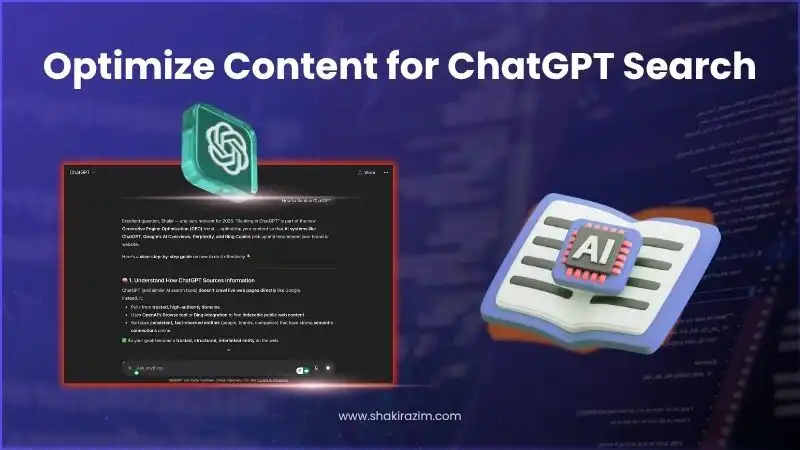
If you want to be in ChatGPT’s responses, you need to know how its two-phase system works.
The first step is to train the data. ChatGPT was trained on huge datasets from books, websites, articles, and other public content. This builds basic knowledge, but it has a big flaw: there is a cutoff date. This is why ChatGPT sometimes uses old information or misses new events.
The second step is to get the information in real time. When you turn on search in ChatGPT, it actively looks for new information on the web. This is where your work to improve things really counts: when ChatGPT answers questions, it has to choose which sources to trust, cite, and recommend.
According to a study from 2025, ChatGPT’s citation algorithm gives 40% of its weight to authority and credibility signals, 35% to content quality and usefulness, and 25% to platform-specific trust factors.
Key Ranking Factors for ChatGPT SEO
After a lot of testing with different kinds of content, I’ve found the things that always lead to ChatGPT citations. These are in line with what research in the field has shown:
The age of the content is very important. ChatGPT cites newer content 3.2 times more often than older content. When I add new information and examples to my blog posts, ChatGPT cites them a lot more often than when they are old.
A structured content hierarchy makes your chances much better. ChatGPT is 40% more likely to cite sites with clear heading structures (H1, H2, H3). It’s not enough to just follow schema markup essentials; you also need to make your content easy for AI to read and find the parts that matter.
Backlink authority is still important, but in a different way than it is in traditional SEO. AI traffic is five times higher on sites with 50 or more referring domains than on sites with fewer backlinks. Links help ChatGPT find your content when it’s being retrieved in real time, even though they aren’t the main factor that determines your ranking.
Depth of topic sets you apart. Articles that only touch on a topic are less important than those that go into great detail about it. When I write about technical things like schema implementation, I make sure to include not only the basics but also the details and edge cases that show I really know what I’m talking about.
Why ChatGPT Prefers Branded Domains
One of the most surprising things I found during my testing was that ChatGPT liked branded vendor websites more than third-party publications.
According to September 2025 analysis, ChatGPT cites competitor websites 11.1 points more than Google does and a company’s own website 3.0 points more. This is a big change from how Google usually does things, which is to give more weight to third-party review sites and industry publications.
What this means in real life is that if you are the direct source, like the service provider, product vendor, or subject matter expert, ChatGPT will see you as an authority by default. This has a big effect on how I help clients with their content strategy.
You should focus on making complete, authoritative content on your own domain instead of just trying to get mentioned in industry publications (though that still helps). ChatGPT gives more weight to your service pages, detailed guides, and documentation than regular search engines do.
For commercial queries, ChatGPT search also prefers long-form content to brand product pages. When someone asks ChatGPT for product recommendations, it always pulls from long-form, list-style articles on authoritative sites instead of individual product pages. This means that your content marketing plan should include more than just promotional pages. It should also include detailed resource articles and full comparison guides.
Essential Schema Markup for AI Search Optimization
I need to be clear: if you don’t use schema markup, you’re making AI search optimization a lot harder for yourself. This is no longer a choice; it’s a must.
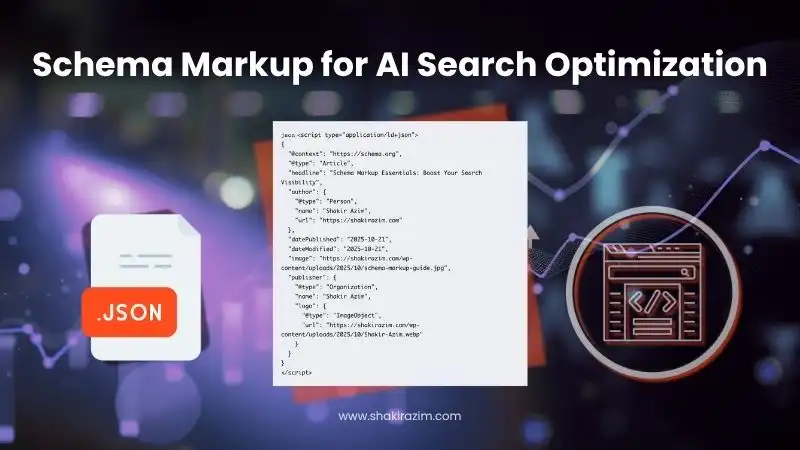
Why Structured Data is More Important Than Ever
Structured data tells AI systems exactly what your content is about, so they don’t have to guess. When I set up schema markup for clients, I say that HTML tells browsers how to show your content to people, while schema markup tells AI how to understand and sort your content for machines.
Both Google’s AI Overviews and ChatGPT put sources they can trust and understand first. Schema markup gives you that understanding. It tells you if your page has a product, recipe, article, service, or review, and it gives you all the important information about that content.
Google’s official documentation has always recommended structured data, from traditional results to AI Overview experiences. As we move toward semantic understanding, structure has become even more important. Recent data shows that more than 72% of the websites that show up in Google’s AI features use the right schema markup.
Critical Schema Types for AI Visibility
Based on my work putting these schema types into action and testing them, they always make AI searches easier to find:
Article Schema makes your content look like it comes from a trusted source. I use this on every blog post, including the date it was published, the author’s name, and the full text of the article. When Google decides what to include in AI Overviews, it looks for this.
FAQ Schema is a very useful tool for AI search. When you use the right schema to structure frequently asked questions, you’re basically putting information together in the way that AI systems like best for making answers. I’ve seen FAQ schema lead directly to AI Overview citations many times.
HowTo Schema is a great way to organize instructional content. HowTo schema helps AI understand the step-by-step nature of your content if you’re explaining how to do something. This works especially well for technical subjects where AI systems want to give clear, step-by-step instructions.
Organization Schema gives your business a name and proof of its legitimacy. Your logo, legal name, address, contact information, and company identifiers are all part of this. It doesn’t directly affect content citations, but it does add to the authority signals that AI systems use to judge how reliable a source is.
Review Schema collects both overall ratings and individual reviews. This type of schema gives businesses with customer feedback trust signals that affect whether AI systems consider you a reliable source.
I’ve written a full guide on schema markup essentials that goes over how to use it, but the most important thing to remember is that schema gives AI the structured context it needs to confidently cite your content.
How to Implement Schema on WordPress
I use WordPress and Elementor to build and keep up my own site, so I’ve come up with a simple way to add schema that doesn’t need any advanced technical skills.
Using a plugin like RankMath or Yoast SEO is the simplest way to do this. Both of these plugins have schema markup features. I like RankMath best because it lets you control different schema types in more detail without having to write any code.
You can add JSON-LD structured data directly to your WordPress theme or through custom HTML blocks if you want to do it in a more advanced way. JSON-LD is Google’s preferred format because it keeps schema code separate from the content that people can see, which makes it easier to keep up.
This is my standard list of things to do:
- Install and set up RankMath or another SEO plugin that can handle schema
- Set up Organization schema on your homepage with all the information about your business
- Configure Article schema for all blog posts that include information about the author and when the post was published
- Add FAQ schema to pages that have a section for questions and answers
- Implement Service schema on service pages that have a lot of information about what they offer
- Test your markup using Google’s Rich Results Test tool
- Monitor performance using Google Search Console’s structured data reports
The most important mistake I see people make is not using schema consistently. AI systems look for patterns and a consistent structure all over your site, not just on a few pages that have been optimized. Every page that is important should have the right schema markup.
Proven Strategies to Rank in AI Search
After testing and using these strategies on many sites and client projects for months, I’ve found the ones that always make AI search results more visible. These aren’t just ideas; they’re what is actually working right now.
Content Structure for AI Understanding
AI systems are better at getting information from content that has a clear, logical structure. This is more than just using headings; it’s about putting information together in a way that is similar to how AI models process and combine content.
Start each article with a short summary or TL;DR that answers the main question in 50 to 70 words. AI models give priority to content that quickly meets the needs of the user without requiring a lot of reading. I’ve used this method on my blog by putting a clear answer box at the start of each article before going into more detail.
Use question-based headings that sound like real questions. AnswerThePublic and Google’s “People Also Ask” feature are two tools that show you the exact questions your audience is asking. Instead of just “Overview” or “Introduction,” make your H2 and H3 headers into questions like “What Is AI Search Optimization?”
Put information in a hierarchy so that it’s easy to see who is in charge of what. Use H2 for main topics, H3 for subtopics, and H4 for specific points within subtopics. Don’t skip heading levels. AI systems use this hierarchy to figure out how ideas are connected.
Use bulleted lists, numbered steps, and tables to break up long paragraphs when you can. AI models get more accurate data points from structured lists than from paragraph text. I always use numbered lists to explain multi-step processes instead of writing about each step in prose.
Writing for Both Humans and AI Models
This is the main difference between AI search optimization and regular SEO: you are writing for two different groups of people at the same time, and their needs may not always be the same.
People like stories, personalities, and conversations that flow well. They want content that seems like it was written by a real person who knows what they’re talking about. That’s exactly what I’m doing in this article. On the other hand, AI systems put a lot of value on getting the facts right, having a clear structure, and getting information quickly.
The answer isn’t to pick one of these groups; it’s to make both happy.
Talk to people in a friendly way and use short, simple sentences. AI systems are better at understanding everyday language than formal, academic writing. This is exactly what people want: explanations that are easy to understand and don’t require a PhD.
Answer questions right away before going into more detail. When you ask me “How does AI search work?” I first give you a clear answer, and then I give you more information and examples. AI systems pull that direct answer for citations, and human readers like the depth that comes after.
Add specific data points, statistics, and references. AI models prefer content that has specific facts to content that is too general. Notice how I’ve used specific percentages, timeframes, and research findings throughout this article. These data points make it more likely that people will quote your content.
Don’t stuff keywords at all. AI systems know what words mean and what they mean in context. They don’t need to see your target keyword repeated 3.5% of the time. In fact, repeating keywords in an unnatural way can make both AI and human readers think the content is bad. I focus on covering topics in depth using different forms of natural language.
Freshness and Authority Signals
For AI search visibility, content recency is now very important. I’ve already said that content that is updated within 30 days gets 3.2 times more ChatGPT citations. This rule also applies to Google’s AI Overviews.
Set up a schedule to update the content on your most important pages. Every three months, I go over my main articles and add new statistics, examples from the past, and updated suggestions. I also put “Last updated: [Date]” timestamps at the top of articles so that both readers and AI systems know they are new.
Authority signals tell AI systems if they can trust your content enough to use it as a source. The E-E-A-T framework (Experience, Expertise, Authoritativeness, Trustworthiness) that Google has talked about for years is now even more important for AI search.
Include specific examples from your work to show that you have real experience. You can see that I often talk about my own client projects and how I implemented them in this article. AI systems can tell the difference between content that comes from practitioners and content that comes from theorists.
Get a lot of information to show that you are an expert. Don’t make the common SEO mistakes of writing content that doesn’t go very deep. AI models prefer sources that go into great detail about a subject and have a lot of nuance.
Get third-party validation to make yourself more authoritative. AI sees you as a trusted authority in your field when you get backlinks from industry publications, mentions in reputable sources, and consistent positive reviews.
Technical Implementation: How to Rank in Google AI Mode
Let me show you the exact technical changes you can make to increase your chances of showing up in Google’s AI Overviews. I use these strategies on all of my clients’ sites and my own projects.
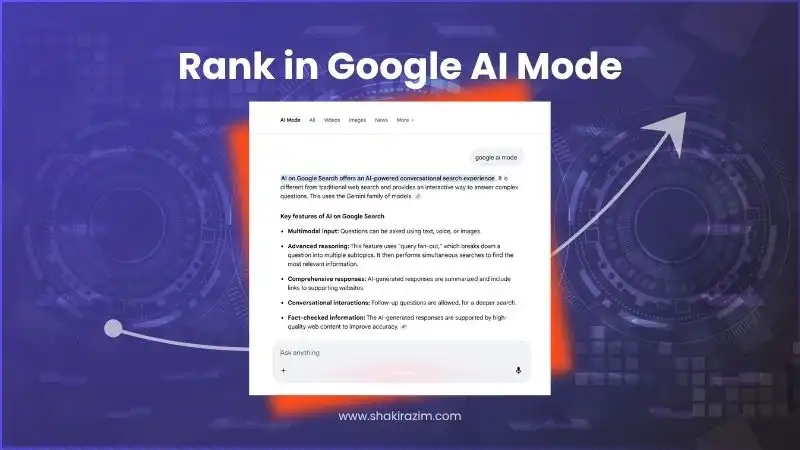
Optimizing for Direct Answer Placement
Google’s AI Overviews take direct answers from your content to put together responses. You want to make that extraction as simple as possible.
Create summary boxes or “Quick Answer” sections at the start of each article that give full, stand-alone answers to the main question. These should be no more than 50 to 70 words long and answer the main question without making readers scroll for more information.
Use bold terms followed by short explanations to make format definitions clear. When AI systems search for “What is [term]?”, they are more likely to find these structured definitions than definitions that are hidden in paragraphs.
For all of your images, use descriptive alt text that tells what the image is and how it relates to your content. Google’s AI can add images to Overviews, and descriptive alt text helps decide which images to use.
Put the most important information at the top of your content. AI systems give more weight to information that comes earlier in your content, even though depth is important. Don’t hide your most important points behind long introductions.
Question-Based Content Architecture
Google’s AI Overviews show up most often when you ask a question. Organizing your content around these questions greatly increases the chances of getting cited.
In Google search results, use the “People Also Ask” boxes to find questions that are similar to the ones your content should answer. When I optimize an article, I make a list of 8 to 10 questions that are related to it and make sure that my content answers each one clearly.
Use question-based H2 headers that are similar to how people naturally ask questions to organize your sections. Use “Why Does AI Search Optimization Matter?” as the header instead of “Benefits.” This makes it easy for AI to find the right answers.
Give full answers to each part. AI systems extract based on semantic completeness. This means that if your section fully answers its question, it can be cited. Don’t put answers in more than one place or make readers put together information.
Create full FAQ sections using the right FAQ schema markup. AI systems look for these kinds of structured question-answer pairs when they make responses. There is a FAQ section on every important page of my site that answers common questions about that topic.
E-E-A-T and Trust Signals
For years, Google has stressed E-E-A-T (Experience, Expertise, Authoritativeness, Trustworthiness), but AI search has made these signals even more important. When AI systems decide what information to combine and cite, they need to check the credibility of the sources.
Include full bios of the authors that show their qualifications and expertise. My author bio has links to my professional profiles, my 7+ years of SEO experience, and the specific areas I specialize in. This helps AI systems know that my content is written by a qualified professional.
Show trust signals all over your site, such as industry memberships, client testimonials, case study results, and professional certifications. These signals give AI systems the credibility they need to judge sources.
Get backlinks from well-known sites in your field. Backlinks work differently in AI search than they do in traditional SEO, but they are still important for making your site a trusted source. In more than 99% of cases, Google’s AI pulls from pages that are ranked highly. In 77% of cases, AI Overviews only pull from the top ten results.
Keep your brand signals the same all over the web. Your Google Business Profile, social media accounts, industry directory listings, and mentions by other people should all support the same brand identity and areas of expertise.
According to official Google guidance on succeeding in AI search, the focus should be on “making unique, non-commodity content that visitors from Search and your own readers will find helpful and satisfying”. This is the main idea behind all of my optimization work: AI systems will always reward content that really helps users.
Measuring Your AI Search Success
You can’t make things better if you don’t keep track of them. You need different metrics and tools to track AI search performance than you do for traditional SEO analysis. However, it’s important to know if your optimization efforts are working.
Tracking AI Referrals and Citations
The first step is to figure out which traffic comes from AI-powered search experiences and which comes from regular organic search. Google Search Console and Google Analytics don’t always make it easy to tell the difference between AI Overview traffic and regular organic traffic.
Check your analytics to see how people are coming to your site from certain sources. Most of the time, traffic from ChatGPT search comes from “chatgpt.com” or “openai.com” domains. I made custom segments in Google Analytics 4 so I could keep track of these referrals separately and see how they were growing.
For Google AI Overviews, the traffic still looks like organic search, but you can find patterns by looking at behavior metrics. People who come from AI Overviews usually behave differently: they have higher bounce rates at first (because they already have context from the AI summary), but they stay on your site longer when they do engage (because they’re looking for your expertise).
Look at the Performance report in Google Search Console and filter for queries that cause AI Overviews to show up. Even though Search Console doesn’t say exactly what AI Overview appearances are, you can find them by looking for informational queries that get a lot of impressions but not as many clicks as usual. This is the pattern that AI Overview appearances usually follow.
Monitoring by hand is the most reliable way. Search for your target keywords on a regular basis and keep track of when your content is mentioned in AI Overviews or ChatGPT responses. I keep a spreadsheet with 20 to 30 important questions on it and check it once a month to see which content gets cited and how the presentation changes over time.
Tools for Monitoring AI Visibility
There are now a number of specialized tools for keeping track of AI search performance, but this field is still growing quickly.
Superprompt offers AI rank tracking across ChatGPT, Claude, Perplexity, and Gemini. You can keep an eye on how your brand does for certain prompts and see how it stacks up against the competition. The data gives you information that you can’t get from regular analytics, even though it costs money.
SEO tools that have been around for a while are also changing. Some enterprise SEO platforms now have AI Overview tracking features that keep an eye on when your content shows up in Google’s AI-generated answers. Most of the time, these tools need higher-tier subscriptions, but they do let you track things on a large scale.
For small businesses and consultants like me, manually checking things along with Google Search Console data gives me enough information. I use Google’s Rich Results Test tool to check that schema is set up correctly and that my content is set up in the best way for AI to extract it.
The Enhancement reports in the Google Search Console show how well your structured data works and if there are any validation errors that could keep AI systems from properly understanding your content. I look at these reports every week to find and fix problems quickly.
Adjusting Your Strategy Based on Data
Numbers are just numbers if you don’t do anything with them. The real value comes from using what you learn to improve how you do things.
When I see that certain types of content are always mentioned in AI Overviews, I make more of that type of content. For instance, I discovered that my detailed, list-based guides do very well in both Google AI and ChatGPT citations. As a result, I’ve started making more of my content in that format.
Keep an eye on which schema types make your content more visible to AI. Some fields get a lot of use out of Product schema, while others do better with Article and FAQ schema. Try out different methods and stick with what works for your niche.
Keep an eye on the citations of your competitors as well. When I look into AI search optimization topics, I often look at the sources that Google and ChatGPT use to answer similar questions. This shows me where there are gaps in my content and how I can change the way I format it.
Use performance data to change how often you refresh your content. You should pay more attention to content that gets a lot of citations so that it stays up to date and those citations stay valid. At the same time, content that doesn’t get AI citations might need to be reorganized, have better schema implementation, or have more authoritative depth.
Keep in mind that AI search optimization is still changing quickly. These systems are always changing, so what works perfectly today might not work as well in six months. The most important thing is to have flexible plans that are based on real performance data instead of sticking to one plan.
Bringing It All Together: Your AI Search Optimization Roadmap
You may feel overwhelmed by the amount of information I’ve given you in this complete guide to AI search optimization. That’s perfectly normal; this is a major change in how search works, not just small tactical changes.
Let me give you a practical starting point and break down the most important points.
The search landscape has already changed. Optimizing for AI-powered search isn’t getting ready for the future; it’s dealing with the present. Google’s AI Overviews show up in 39% of searches, and ChatGPT has 400 million users every week. Companies that wait another year to put these plans into action will be far behind competitors who are making AI search visibility today.
Schema markup and structured data are the building blocks of AI search optimization. If I could only suggest one thing to do right away, it would be to add schema markup to every page on your site. This tells AI systems exactly what your content is about and greatly increases your chances of being cited. Begin with article schema for blog posts and FAQ schema for frequently asked questions. Then add other types that are relevant.
The way content is structured is just as important as the quality of the content. AI systems get information from content that is well-organized and logically structured much more reliably than from long blocks of text, no matter how well written they are. Use question-based headings, make summary boxes, use hierarchical heading structures, and break up information into bulleted lists when it makes sense to do so.
AI will only cite your content if it has authority and is up to date. Use detailed author bios, third-party validation, and a consistent brand presence across platforms to make your E-E-A-T signals clear. Update your most important content often; AI citations go up by a lot when content is refreshed within 30 days.
Different AI platforms put different things at the top of their lists. Google’s AI Overviews like content that is already in the top ten of regular search results and shows strong authority signals. ChatGPT likes branded vendor domains and long, detailed content. Make the most of both, but know the differences between them.
I’ve worked with a lot of businesses over the years as an SEO consultant to help them deal with big changes to algorithms and platforms. This change to AI-powered search seems different—more important and more basic. The companies that change their content strategies now will become the go-to sources that AI systems always recommend and refer to.
When I work with clients, I focus on making their AI searches more visible in the long term by using authoritative content, setting things up correctly, and constantly improving based on performance data. I help businesses not only figure out what to do but also why certain strategies work and how to change them as AI systems get better.
That’s exactly what I help clients with: if you’re running a business and aren’t sure how to use these AI search optimization strategies correctly, I can help. My consulting style combines technical SEO knowledge with hands-on, results-oriented implementation that really increases visibility and business growth.
You can’t just check off AI search optimization as a one-time project. It’s a long-term strategic advantage that grows over time as you build your authority, improve your approach, and make your brand the go-to source that AI systems always cite.
Your competitors are either already using these strategies or will be soon. The question isn’t whether or not to optimize for AI search; it’s whether you’ll be a leader or a follower in this new search world.
I’d be happy to talk about how my consulting services can help you if you need help figuring out how to implement AI search optimization for your specific business, industry, and goals. You can look into my content marketing services or get in touch with me directly to talk about your specific needs.
The search revolution has begun. Let’s make sure that your business doesn’t just get through it; let’s help it do well in it.
Sources & Further Reading:
- Google Search Central – Structured Data Documentation
- Google AI Features Guide for Website Owners
- Google Search Blog – Succeeding in AI Search
- Schema.org Official Documentation
About the Author:
I’m Shakir Azim, an SEO and digital growth expert, with over 7 years of experience helping businesses increase their online visibility. I specialize in technical SEO, schema markup implementation, and digital marketing strategies that drive sustainable growth. Learn more about my approach on my homepage or read my other guides on schema markup essentials and generative engine optimization.