The SEO & Digital Growth Guide 2026 is your guide to doing well in a world where AI-first discovery drives search. It’s not enough to just be on the first page of search results anymore. People now demand instant, trustworthy answers thanks to Google AI Overviews, ChatGPT with real-time browsing, Perplexity, and even TikTok and Instagram search. This tutorial will go over the basics, discuss Generative SEO (GEO), and provide you tips on how to create authority, visibility, and long-term growth.
Why SEO & Digital Growth Matter in 2026
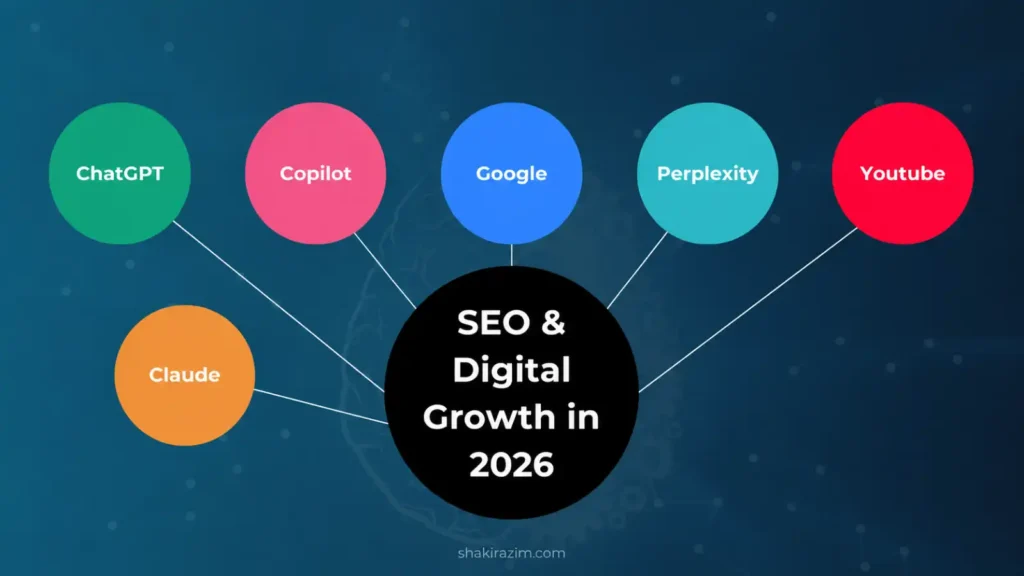
One thing is evident from the SEO & Digital Growth Guide 2026: SEO is no longer only about getting to the top of Google. In 2026, search is all about being visible across AI engines, social platforms, and search ecosystems. People don’t just ask Google for help anymore; they also ask ChatGPT, Perplexity, use voice search, and scroll through TikTok, Instagram, and YouTube Shorts. This change is very important because:
- AI Overviews and AI assistants reduce direct clicks even more. If your content isn’t structured for AI visibility, your site won’t get mentioned and you’ll lose traffic.
- Long-tail, conversational, and voice-based queries are the most common. Instead of typing “best SEO tools,” people instead ask full questions like “Which SEO tool is best for beginners in 2026 with AI features?” In any content strategy for 2026, it is important to optimize for these queries.
- Brand trust and entity authority are more important than backlinks. Google now values real-world reputation, author identity, and brand mentions more than just links, which means that personal branding is now a core part of SEO.
- Social search and short-form video discovery are dominating. TikTok, Instagram Reels, YouTube Shorts, and LinkedIn are now search engines, which shows that SEO needs to be part of a multi-platform digital growth strategy.
- This means that the old way of keyword stuffing is completely outdated for bloggers, creators, and businesses. Building trust, creating structured content optimized for Generative SEO (GEO), and being present across platforms so that you appear in Google, AI assistants, and social search are all important for real growth now.
Understanding the New SEO Landscape
SEO in 2026 is based on three main ideas: AI-first search, entity authority, and user experience.
This is how things have changed:
1. AI Search Assistants
People are getting information in new ways thanks to Google AI Overviews, ChatGPT, Perplexity AI, and voice assistants. Users don’t have to visit multiple websites anymore; instead, they get summarized answers. Your job is to make sure that your content is cited in those answers.
2. Questions in Natural Language
You don’t have to type “best SEO tools” anymore. People now search the way they speak:
“Which SEO tool is easiest for beginners in 2026?”
“Is SurferSEO better than NeuronWriter in 2026?”
Your content needs to answer these conversational and intent-driven queries.
3. E-E-A-T is More Important Than Ever
- Google prioritizes Experience, Expertise, Authoritativeness, and Trustworthiness even more strictly. That means:
- Show real experience (case studies, results).
- Add author identity (bio, LinkedIn, credentials).
- Get cited across platforms to build authority.
4. Social Proof and Brand Signals
Google and AI engines now heavily rely on brand signals. Your name or business will rank higher if it appears consistently across trusted platforms, reviews, and content mentions.
The main point is that SEO isn’t about manipulating rankings anymore. It’s about building a real, trusted brand across multiple platforms.
SEO Fundamentals That Still Matter
The basics are still important in 2026. Before you focus on GEO and AI-driven strategies, these are your foundation.
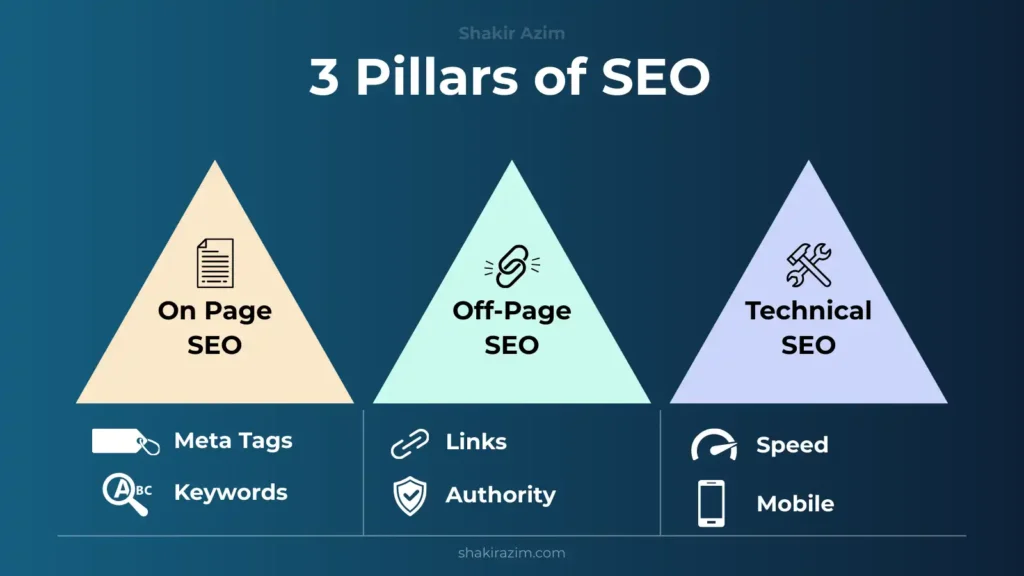
1. On-Page SEO
- Titles that are clear and intent-focused: Include your keyword naturally.
- Use proper headings (H1, H2, H3) to structure content for both users and AI.
- Place your main keyword in the first 100 words naturally.
- Internal links: Connect related content into clusters. (learn more in this internal linking strategy guide).
- External links: Link to trusted and relevant sources.
- Meta descriptions: Improve CTR and clarity.
- Image alt text: Helps accessibility and SEO.
For example, instead of saying “Best SEO tools SEO SEO,” say “Here are the best SEO tools in 2026 for creators and businesses.”
Also follow a proper on-page SEO checklist for better optimization.
2. Off-Page SEO (Building Authority)
Backlinks are still important, but authority and relevance matter more than volume.
- Ways to build authority:
- Guest posting on niche-relevant sites.
- Collaborations on LinkedIn, YouTube, podcasts.
- Building a strong personal brand so your name becomes a search signal.
3. Technical SEO (Site Health)
A site that is broken or slow won’t rank.
You need to do:
- Improve page speed (Core Web Vitals updated metrics).
- Optimize for mobile-first and voice search.
- Focus on interaction metrics (INP replacing FID).
- Use HTTPS for security.
- Maintain sitemap and crawlability.
For deeper optimization, check this WordPress SEO optimization guide.
The official Search Central documentation from Google explains how Core Web Vitals affect search engine rankings.
The Growth of AI and Generative SEO in Search
Search is evolving faster than ever. We’re no longer just typing keywords and browsing links—AI is answering queries directly. With tools like Google AI Overviews and AI assistants, people expect fast, clear answers.
What does it mean to optimize a Generative Engine?
GEO means optimizing your content for AI-powered search engines like Google AI Overviews, ChatGPT, and Perplexity.
You need to create content that is structured, credible, and easy for AI to extract and cite.
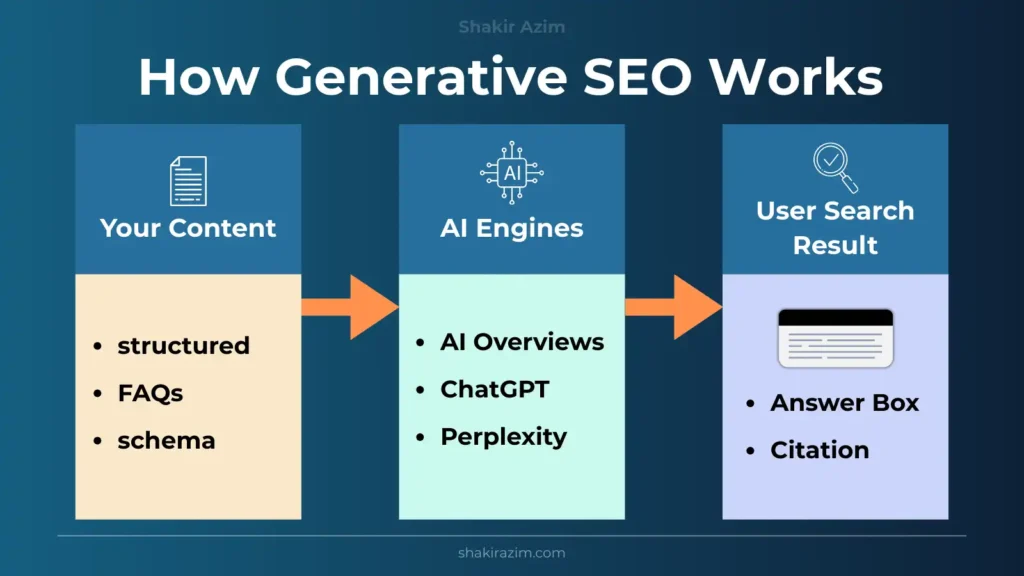
How to do it:
- Make your content well-structured and factual.
- Use FAQs, bullet points, and clear sections.
- Add schema markup (FAQ, Article, How-to). (learn more in this schema markup guide).
Cite reliable sources and data. - Cite reliable sources and data.
You can also explore advanced AI search optimization techniques.
The New Role of AI Overviews in Search Rankings
Before: You needed Position #1.
Now: You can gain massive visibility even without ranking first if your content is cited in AI responses.
Change by:
- Targeting questions with long tails.
- Adding sections for questions and answers.
- Emphasizing the author’s expertise and credibility.
AI Tools for SEO Processes
- Keyword research tools: Semrush, Ahrefs, LowFruits, Keyword Insights
- Content optimization tools: SurferSEO, NeuronWriter, Frase
- Analytics tools: Google Search Console, Google Analytics 4, Microsoft Clarity
- AI tools: ChatGPT, Perplexity, Claude, Jasper
👉 I’ve also put together a detailed list of the Best SEO Tools in 2026 to help you choose what actually works for you.
Content Strategy for Growth
Content drives SEO, but random posting does not work anymore—you need a structured strategy.
For a full roadmap on planning, check my Content Strategy for Creators: How to Grow Your Blog & Brand (2026 Guide)
Building Topic Clusters
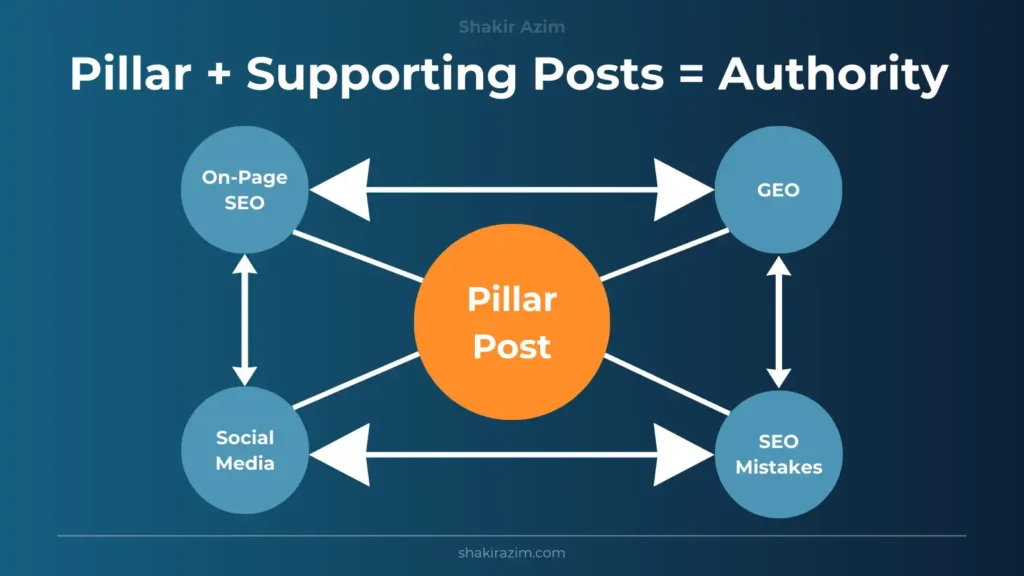
- A pillar guide (like this one).
- Supporting posts (e.g., On-Page SEO Checklist, Keyword Research).
- Internal linking between them. (learn more about topic clusters for SEO).
Planning a Content Calendar
- Publish 1 quality post per week.
- Balance evergreen + trending topics.
- Update content every 3–6 months (faster than before).
Repurposing Content
One blog → many formats:
- Blog → LinkedIn post.
- Blog → YouTube explainer.
- Blog → Twitter/X thread.
- Blog → Instagram Reel or TikTok
This builds reach and brand signals.
SEO Mistakes to Avoid in 2026
- Focusing only on keywords instead of user intent and entity SEO.
- Ignoring AI visibility (GEO).
- Buying low-quality backlinks.
- Not updating content regularly.
- Having a slow, cluttered, or unoptimized mobile experience.
Check my guide on 10 Common SEO Mistakes That Hurt Rankings for more details.”
SEO Tools & Resources
Free Tools
Paid Tools
Case Studies & Predictions
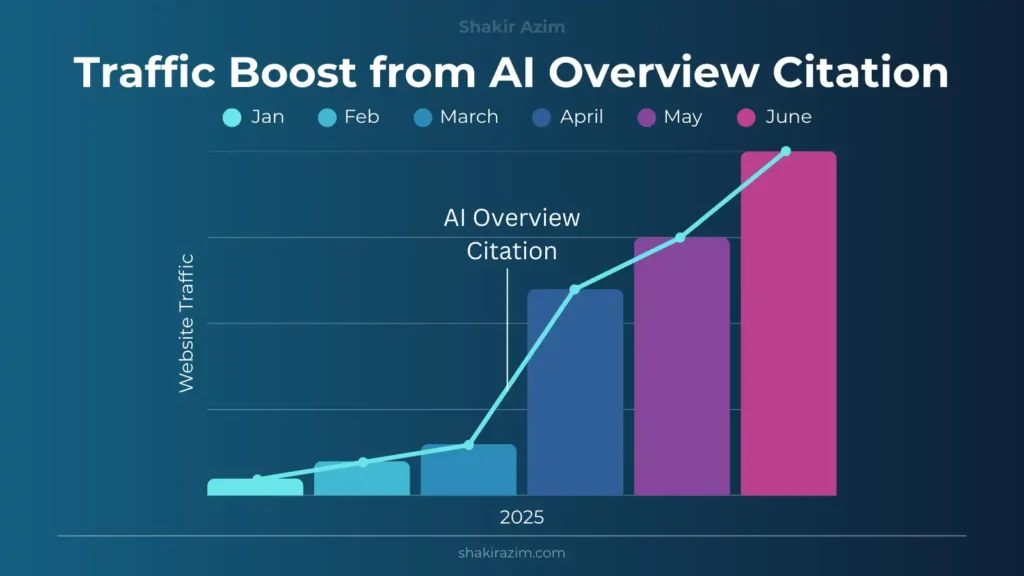
Case Study – Blogger: One person who blogs made a group of related posts about SEO tools. One FAQ was mentioned in a Google AI Overview within six months. The result was a 60% increase in organic traffic.
Case Study – Creator Brand: A creator turned blog guides into LinkedIn posts and YouTube Shorts. The brand got more mentions on different platforms, which gave it more authority in search.
What we think will happen After 2026
- AI assistants will dominate discovery → GEO will become essential.
- Brand authority will outweigh traditional SEO tactics.
- Search, social, and AI will fully merge into one ecosystem.
Conclusion – Your SEO Growth Roadmap
SEO in 2026 isn’t just about rankings. It’s about being visible everywhere: Google, AI engines, social platforms, and voice search.
To succeed:
- Master the fundamentals.
- Adapt to GEO and AI search.
- Build topic clusters.
- Repurpose content.
- Stay consistent and update regularly.
👉 Bookmark this guide and keep updating your strategy as SEO evolves.
Frequently Asked Questions (FAQ) – SEO & Digital Growth in 2026
Q1. What is SEO in 2026, and how is it different?
It includes Generative SEO (GEO) and AI-driven discovery. Trust and authority are more important than ever.
Q2. What does GEO mean?
It means optimizing content so AI tools like Google AI Overviews, ChatGPT, and Perplexity cite your content.
Q3. How do AI Overviews change the way SEO works?
They reduce clicks but increase visibility if your content is referenced.
Q4. What basic things still matter?
SEO on the page, SEO off the page, and technical SEO.
Q5: How often should I change the content?
Every 3–6 months for best performance.
Q6. Do I need paid tools?
Not for people who are new. Tools that are free are enough. Paid tools help you grow.
Q7. How long should the posts be?
Pillar posts should be between 2,000 and 3,000 words. Supporting posts: 1,200 to 1,800 words.
Q8. Is SEO dead?
No, it’s changing with AI, not going away.
Q9. How do beginners start?
Learn the basics, choose a niche, make pillars and clusters, use free tools, and stick with it.
Q10. What will happen after 2026?
Search, AI, and social media all work together to give you multi-channel authority. Branding and trust will be more important than ever.